
Remote GP Service for Acquired Brain Injury Patients
Specialist primary care consultations — delivered by video, purpose-built for ABI complexity.
Travel to a GP surgery can be profoundly distressing for patients living with an Acquired Brain Injury. Noise, unfamiliar environments, crowded waiting rooms and the physical and cognitive demands of transport all contribute to heightened anxiety, fatigue and behavioural instability. For many ABI patients, a routine GP appointment carries risks that far outweigh the benefits of in-person attendance.
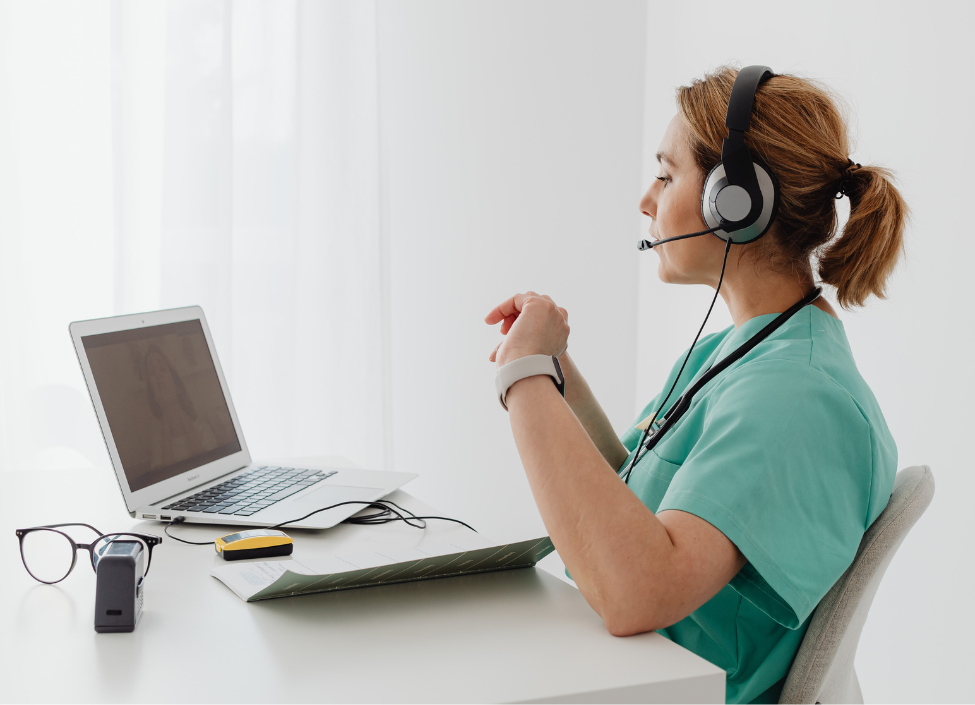
Our Remote GP Service removes these barriers entirely. Consultations are delivered by video by clinicians with specialist knowledge of ABI presentations, complex polypharmacy, the neurological context of common medical complaints, and the legal and capacity frameworks that govern clinical decision-making in this patient group.
Core service areas:
Acute illness management
- Assessment and management of intercurrent illness — infection, pain, respiratory, gastrointestinal
- Prescribing of acute medication where clinically appropriate and safe
- Referral letters and urgent escalation to NHS services where required
- Prevention of unnecessary emergency department attendance
- Same-day clinical advice for deteriorating presentations
- Liaison with 999/111 where escalation is needed
Chronic condition oversight
- Review of existing long-term conditions — hypertension, diabetes, epilepsy, COPD
- Coordination with specialist teams: neurology, rehabilitation medicine, endocrinology
- Review of medication efficacy and side effects in the context of ABI
- Clinical letters and correspondence for GP and specialist coordination
- Annual health checks for ABI patients in residential or nursing care settings
- Management of co-occurring mental health conditions in the ABI context
Clinical decision support
- Real-time guidance to support workers and care staff on evolving or worsening symptoms
- Clinical advice for case managers on patients between scheduled appointments
- Capacity-informed clinical decision-making and documentation under the Mental Capacity Act 2005
- Best Interests consultation and documentation where required
- Clinical input for Court of Protection hearings and welfare decisions
- Documentation formatted for deputyship review and legal proceedings
Why specialist GP access matters for ABI patients
How consultations are delivered:
Delivery & access
- Secure, NHS-grade video consultation platform — fully GDPR compliant
- Patient may be accompanied by carer, support worker, family member or case manager
- Pre-consultation briefing document sent to referrer or case manager in advance
- Post-consultation clinical summary produced and shared within 24 hours
- Prescription issued direct to patient or electronically to patient's nominated pharmacy where required
- Referral letters, clinical correspondence and specialist referrals produced as needed
- Available Monday–Friday with extended hours by prior arrangement
- Urgent same-day slots available subject to clinical need and capacity
Appointment types
- Standard consultation: 20 minutes — acute presentations and straightforward reviews
- Complex ABI review: 40 minutes — multi-system, poly-pharmacy or capacity-sensitive cases
- Urgent same-day slot: 20 minutes — for acute deterioration (subject to availability)
- Multi-professional review: case manager or care coordinator present throughout
- Medication review consultation: dedicated 30 minutes
- Annual health check: structured 60-minute comprehensive review for residential patients
- Carer and support worker briefing: 20 minutes — clinical guidance for care team
REMOTE GP CONSULTATION
From £TBC
Frequently Asked Questions
Our FAQ section is here to answer the most common questions about this service and help you feel fully informed before getting started. If you don’t see the answer you’re looking for, please don’t hesitate to get in touch—our team is always happy to help and provide clarity where needed.
Why is a specialist Remote GP service important for patients with an Acquired Brain Injury?
Patients with Acquired Brain Injury frequently present to general primary care with symptoms — fatigue, headache, mood change, sleep disruption, pain — that are misattributed to psychiatric or behavioural causes rather than being recognised as neurological sequelae of the injury. A clinician without ABI expertise may not consider the full differential diagnosis, leading to delayed or inappropriate treatment. Our Remote GP service is delivered by clinicians with specific knowledge of ABI presentations, complex polypharmacy, capacity considerations under the Mental Capacity Act, and the legal and care framework that surrounds these patients.
How do I book a Remote GP consultation for my patient?
Consultations can be booked via our secure referral portal or by contacting our clinical team directly. We ask referring case managers to provide a brief clinical summary and confirm the patient’s current location and support arrangements. We will then confirm an appointment time, send a pre-consultation briefing form, and provide the patient and their care team with the secure video link. Most appointments can be arranged within 1–2 working days; urgent same-day slots are available subject to availability.
Can the patient's support worker or case manager attend the consultation?
Yes, and we actively encourage it for patients with significant cognitive, communication or behavioural needs. Having a familiar carer or case manager present helps the patient feel more at ease, provides the clinician with valuable contextual information, and ensures that post-consultation instructions are understood and documented. For Best Interests consultations where the patient lacks capacity, a professional or personal representative should always be present.
What happens after the consultation — will the patient's GP be informed?
Following every consultation, we produce a clinical summary that is sent securely to the referring case manager within 24 hours. Where a prescribing decision is made or a significant clinical change is documented, we also produce a letter to the patient’s registered GP as standard, ensuring continuity of care and an up-to-date primary care record. Where the patient does not have an active GP registration, we can advise on the appropriate registration pathway.
Can Nexus ABI prescribe medication during a Remote GP consultation?
Yes. Our clinicians are GMC-registered prescribers and can issue prescriptions where clinically appropriate following a consultation. Prescriptions are issued electronically and can be directed to the patient’s nominated community pharmacy, including delivery services, removing the need for the patient or carer to collect prescriptions in person. Controlled drug prescriptions are subject to standard regulatory requirements and may require additional documentation.
What if my patient deteriorates during or after the consultation and requires urgent care?
If a patient presents with a clinical emergency during a consultation, our clinician will initiate the appropriate emergency response — including calling 999, directing the carer to do so, and remaining present via video until emergency services arrive. Following the consultation, if we identify a clinical concern that requires urgent follow-up, we will contact the case manager and care team directly and document the escalation plan. We always provide a clear post-consultation safety-netting plan to the carer or support worker.
Is the video platform secure and GDPR-compliant?
Yes. We use an CQC-approved, end-to-end encrypted video consultation platform that is fully compliant with UK GDPR and the Data Protection Act 2018. No consultation is recorded without explicit informed consent. Clinical notes from the consultation are stored on our secure clinical management system with role-based access controls, in line with NHS Caldicott principles and our CQC registration requirements.
Can Nexus ABI provide GP services for patients living in residential or nursing care?
Yes, and this is one of the most common use cases for our Remote GP service. Many ABI patients in residential care settings have unmet primary care needs due to the complexities of arranging in-person GP attendance, or because their clinical presentations are not well understood by generalist primary care providers. We can provide regular scheduled remote consultations and annual health checks for patients in residential care, with clinical summaries shared with the facility’s care team and registered manager.
What is the difference between the Remote GP service and the Diagnostic Monitoring service?
The Remote GP service provides clinical consultations — assessment, diagnosis, prescribing, clinical decision-making and correspondence. It is the equivalent of a GP appointment, delivered by video. The Diagnostic Monitoring service involves a registered clinician attending the patient in person to carry out physical observations, ECGs, phlebotomy and clinical examinations that cannot be conducted remotely. The two services complement each other and are frequently used together within a patient’s care plan.
How is the service funded — can it be covered through a personal injury settlement?
Yes. Remote GP consultations are routinely funded through personal injury settlement budgets managed by case managers or financial deputies. We provide fully itemised invoices suitable for Court of Protection audit. Other funding routes include NHS Continuing Healthcare where appropriate, private care funding, and direct instruction from solicitors managing compensation funds. A clear fee schedule is available on our Fees & Funding page.